

Cotswold Wool Churches Explained: Why These Medieval Buildings Are So Grand
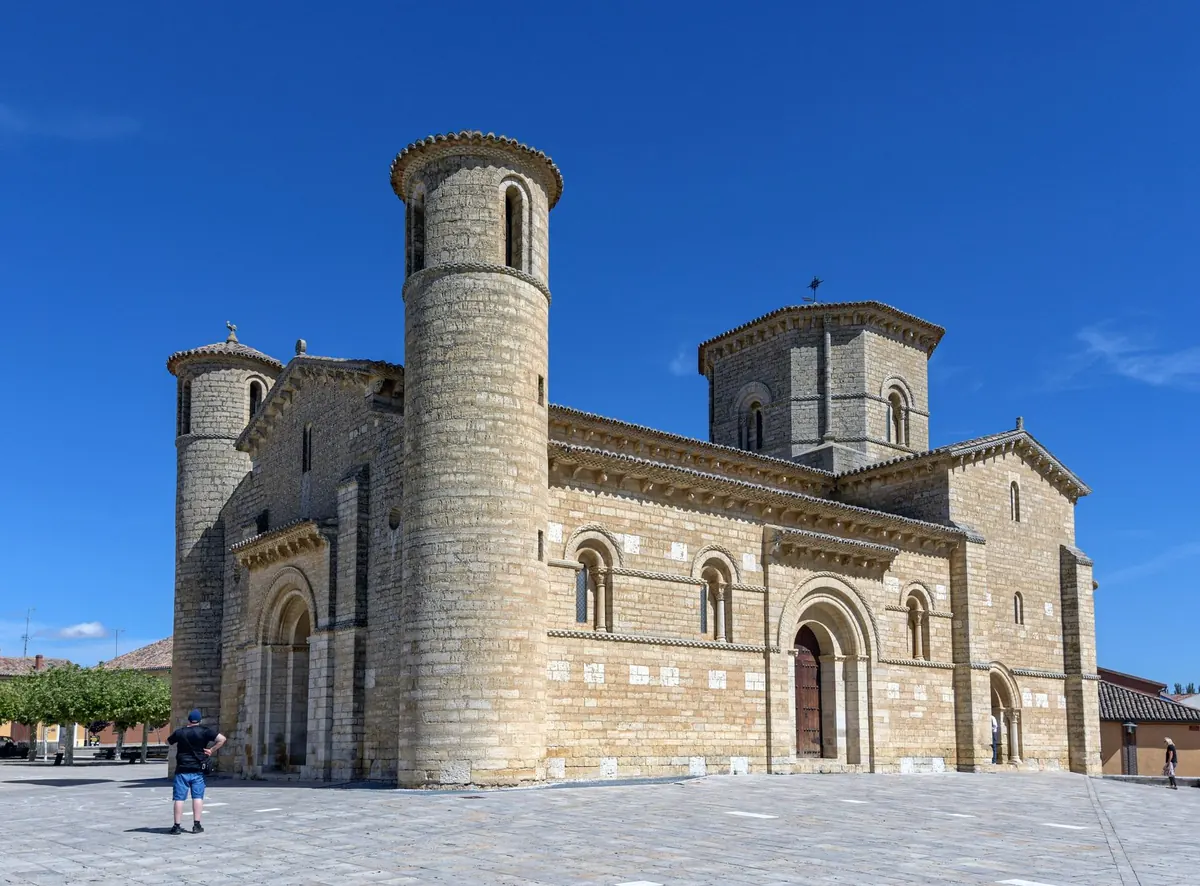
Stand in the market place at Northleach and look up at the tower of St Peter and St Paul, and the question answers itself before you have finished asking it. The thing is enormous. A small town on the old wool road has a church that would not embarrass a city, and it was built by people who sold fleeces for a living. Chipping Campden, Cirencester, Burford and Fairford tell the same story in stone: for about two hundred years, wool paid for some of the finest parish churches in England.
Sheep, limestone and a very good living
The Cotswold hills are made of oolitic limestone, which weathers into thin, well-drained soils and short, springy turf. That is poor ground for wheat and excellent ground for sheep. The native breed, the Cotswold Lion, grew a long, lustrous fleece that was prized by medieval cloth makers in Flanders and Italy — the kind of wool that could be combed rather than carded, and spun into strong worsted cloth.
From the twelfth century onwards, the great monastic houses of the region — Cistercian abbeys at Kingswood and Hailes, the Augustinian canons at Cirencester — ran huge flocks on the uplands and sold the fleeces through the wool staple, the regulated export market that eventually settled at Calais. Laymen got rich alongside them. By the fourteenth and fifteenth centuries, Cotswold wool merchants were lending money to kings and building themselves the sort of houses that survive today as manor farms and hotels.
Why merchants spent it on churches
It is tempting to read the wool churches as pure vanity. They are not quite that. In the medieval mind, a wealthy man's first duty was to shorten his time in purgatory, and the surest way to do that was to endow prayers. A chantry chapel with a priest singing mass for your soul, a new aisle where the poor of the parish could hear the sermon, a window filled with saints who would remember your name — these were investments in the next world as well as statements in this one.
So the money went into fabric and liturgy at the same time. William Grevel, the Chipping Campden woolman whose brass inscription calls him the flower of the wool merchants of all England, paid for the tower of St James. John Fortey, who died in 1458, left his woolpack carved in brass on the floor of Northleach church. Alongside the merchants, parish guilds, lesser tradesmen and ordinary households gave what they could, which is why the buildings feel communal rather than private.
The style that wool money bought
Almost all the great Cotswold churches are Perpendicular, the last phase of English Gothic, running from the mid-fourteenth century into the early sixteenth. Where earlier builders used flowing, curving tracery, Perpendicular designers worked with vertical mullions and horizontal transoms, creating a grid of stone that could hold very large panes of glass. The result is light. Walls could be thinner, windows taller, and the whole church wider and flatter-roofed than the narrow, dark naves of a century before.
Timing mattered too. The Black Death of 1348–49 killed a great many people, but the survivors found wages higher and land easier to rent. Money that might have gone into new fields went instead into parish churches, and the wool trade kept flowing. What followed was a building boom that lasted roughly until the Reformation, when the monasteries were dissolved, the chantries were closed, and the steady stream of endowment dried up.
Start with the outside
Before you go in, walk a full circuit of the churchyard. The tower is the calling card: tall, slender, usually square, topped with battlements and pinnacles, and often with a stair turret climbing one corner. Cotswold limestone into ashlar — smooth, finely jointed blocks — gives these towers their pale, almost buttery look, especially in low evening light. Look for buttresses stepped back in stages, a big west window, and a carved band or string course running around the middle.
The south porch was usually the grandest entrance, and many have a small room above, once used for storage or by a priest or schoolmaster. In the churchyard, look for medieval chest tombs and, at Northleach and Campden, churchyard crosses with fine carving.
What to look for inside
Once through the door, the scale can be disorientating. These naves were built to hold a crowd, and the arcades — the rows of arches between nave and aisles — are often unusually tall. Here is a short list to work through:
- Merchants' brasses. Look at the floor, especially near the chancel step. Woolmen are shown in long civilian gowns, sometimes with a woolpack or a merchant's mark at their feet.
- Merchant marks. These look like a monogram or a four-pointed sign with a stem, and they turn up on bench ends, glass, fonts and tombstones — a medieval trademark left in the fabric.
- Rood screens. Many survive in part, with carved foliage and traces of red, blue and gold paint on the wood.
- Wall paintings. Faded Dooms, St Christopher figures and consecration crosses have survived whitewash in several churches.
- Roofs. Look up. Wagon roofs with carved angels, bosses and corbels are common, and the woodwork is often the finest thing in the building.
- Glass. Most medieval glass was lost, but Fairford's St Mary keeps a near-complete scheme of early sixteenth-century windows given by the wool merchant John Tame — the best single reason to visit the town.
- Fonts and chapels. Octagonal fonts with carved panels, and side chapels that were once chantry foundations, often carry the names of the families who paid.
Wool churches to put on a shortlist
Northleach, for the wool brasses and the sheer ambition of the tower. Chipping Campden, for Grevel and the finest high street in the Cotswolds. Cirencester's St John the Baptist, vast and full of merchant tombs. Burford, where the church sits above a town that grew rich on wool and later on coaching. Fairford, for the glass. Winchcombe and Lechlade for quieter, less-visited examples, and Tetbury if you want to see a wool church in a working market town.
Planning a wool church day out
Two or three churches make a good day; five becomes a blur. Pick a cluster — Northleach, Cirencester and Fairford sit reasonably well together, as do Chipping Campden, Broadway and Winchcombe. Aim to arrive mid-morning, walk the outside first while your eyes adjust, then spend real time inside.
Most parish churches in the Cotswolds are open during daylight hours and free to enter, though they rely on donations and many are locked outside certain hours. Check notices for keyholder details, and never wander in during a service. Take binoculars if you have them — roofs, corbels and window tracery reward a closer look. Stained glass reads best on a bright overcast day; hard direct sun washes the colour out.
Wear shoes you don't mind scuffing, watch for uneven floors and low doorways, and leave time for the pub afterwards. The buildings were paid for by people who worked for a living. Sitting with a pint in the shadow of a tower they paid for is a fair way to end the visit.